S-92 Training at CAE Oslo: What a 25-Year Helicopter Pilot Learned About Global Aviation Training
By Captain Phil
In the spring of 2026, I travelled to Norway for S-92 training at CAE Oslo. I expected to come home with a deeper understanding of one aircraft. I did. But the more important lesson was broader: I saw, from the inside, how a global aviation training environment turns knowledge into standardised, repeatable performance.
I had already spent more than 25 years in rotary-wing aviation. My career had taken me through military aviation, police aviation and fire-service aviation. I had trained in the United States on the AH-64D and AH-64E, completed an instructor pilot course, and spent years teaching and evaluating other pilots.
None of that made me immune to becoming a student again.
The first time I sat in the classroom at CAE Oslo and looked at the S-92 system displays, I was reminded of something every experienced pilot eventually learns: experience helps you learn faster, but it does not give you permission to skip the learning.
This article is not a course brochure and it is not official CAE guidance. It is an independent account of what I learned as an experienced helicopter pilot going through S-92 training in an international training environment. Course content, approvals and schedules can change, so anyone planning training should confirm current details directly with CAE.
CAE Oslo is more than a helicopter training centre
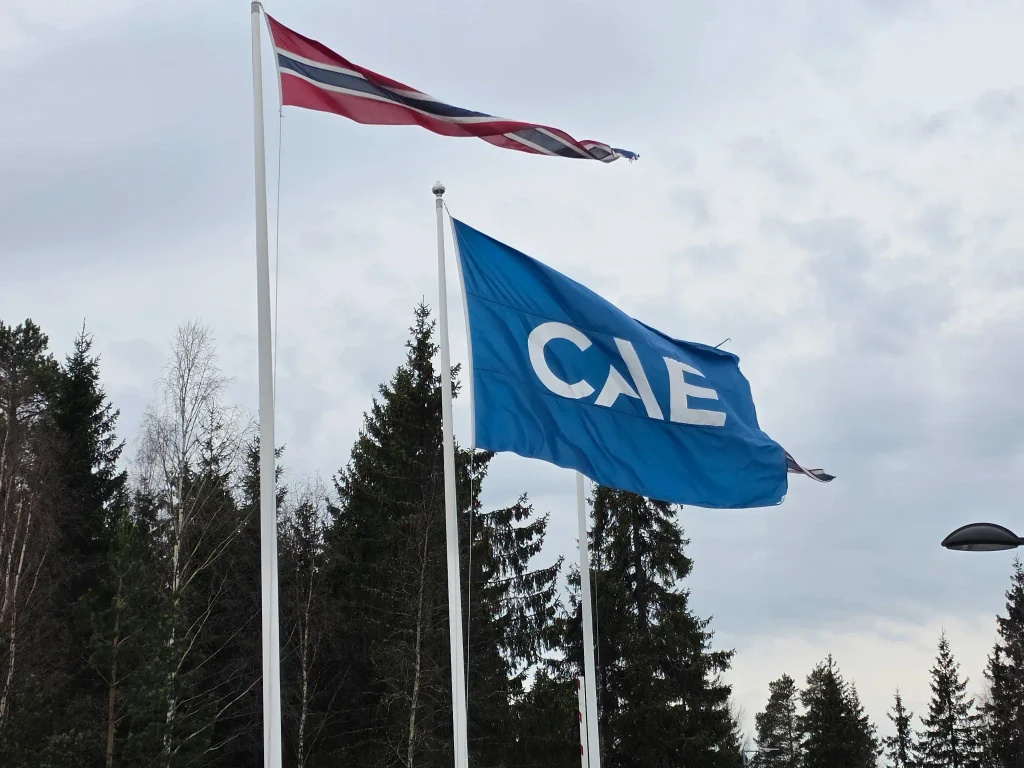
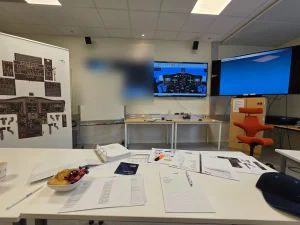
During my month in Oslo, people from different parts of aviation moved through the same facility every day. I saw airline pilots in uniform, helicopter pilots preparing for simulator sessions, and cabin crew trainees moving between their own training areas.
They were not all learning the same aircraft or even doing the same job. But they were working inside the same training culture.
That impression is consistent with CAE’s own public information. CAE’s FY2025 Norwegian Transparency Act report describes CAE Centre Oslo AS as an operating company providing integrated training solutions to commercial aircraft and helicopter operators. CAE’s April 2025 cabin crew training brochure also lists Oslo in its worldwide cabin-safety training network. CAE’s current aircraft-platform listing includes Sikorsky S-92 training in Oslo.
That is why I would not describe CAE Oslo simply as “the place where the S-92 simulator is located.” It is better understood as part of a larger aviation-training ecosystem in which fixed-wing pilots, rotorcraft pilots and cabin crew train for different roles under a common logic: standardisation, procedures, communication, recurrent practice and safety.
Global aviation training sounds like a grand phrase. In practice, it looked very ordinary. Different nationalities, different accents and different levels of experience walked into classrooms and simulators every morning. What made the environment international was not a flag on the wall. It was the fact that people with different backgrounds were expected to perform to a common standard.
Why S-92 training is not simply “learning another helicopter”
The Sikorsky S-92 is a large, complex twin-engine helicopter used around the world for demanding missions. Lockheed Martin’s current S-92 information states that the fleet represents more than 300 aircraft and 2.6 million flight hours, supporting missions that include offshore energy, search and rescue, head-of-state transport and other high-value operations.
Training for an aircraft like this cannot be reduced to memorising switch positions.
A pilot needs to understand what the aircraft is doing in the normal condition, what changes when a system fails, how that failure is presented to the crew, what action is required, and what operational consequences remain after the immediate problem has been handled.
That interconnected thinking became one of the most important parts of my S-92 training.
Electrical, hydraulic, flight-control, powerplant, warning and automatic-flight-control systems can be studied chapter by chapter. But the aircraft does not fail chapter by chapter. A change in one system can affect another system, cockpit indications, automation, aircraft capability and ultimately the crew’s plan.
The real question is not, “Can I name the components?”
It is, “Can I explain the aircraft’s current state and make the next safe decision?”
The five-step system-thinking method I used in Ground School
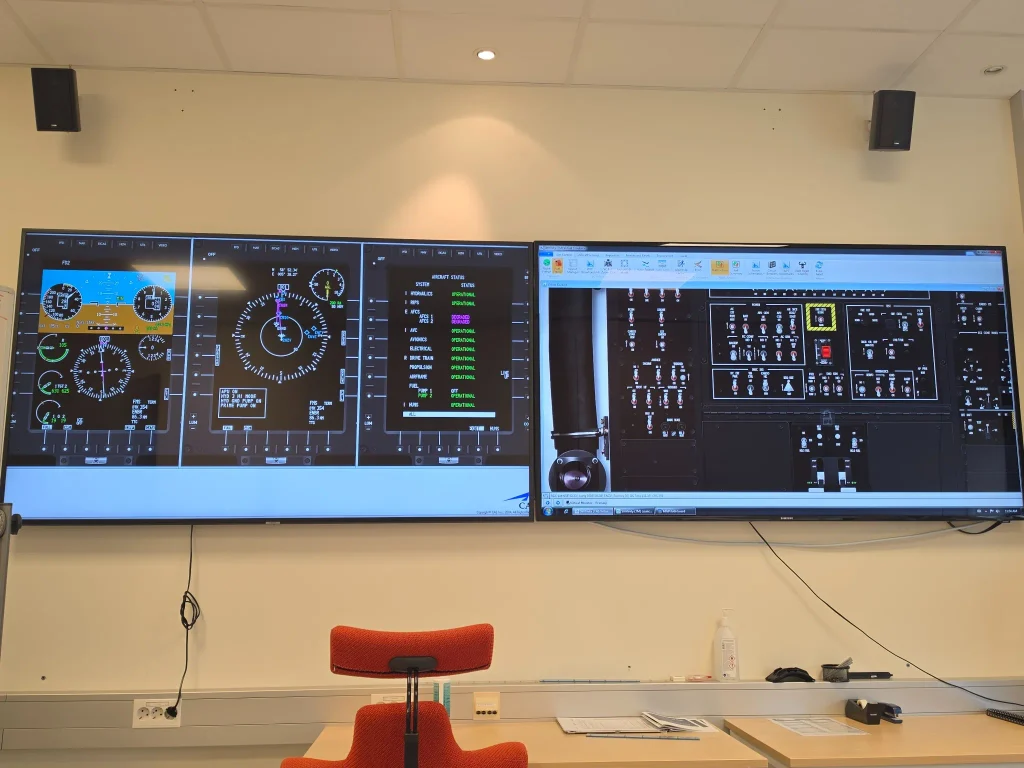
As the course progressed, I found it useful to study each major system through the same five questions.
1. NORMAL — What is the normal flow?
Before studying failures, I wanted to be able to describe the normal system clearly. Where does power, pressure, data or control authority come from? Where does it go? What should the crew normally see?
2. FAILURE — What changes first?
If a component fails, what is the first meaningful change in the system? Which redundancy is lost? What continues to operate, and what no longer operates normally?
3. INDICATION — How does the crew know?
What indication, caution, advisory, status message or change in aircraft behaviour tells the crew that something has happened?
4. ACTION — What must the crew do?
What should be confirmed, prioritised and accomplished in accordance with the approved procedure and checklist?
5. CONSEQUENCE — What capability remains?
After the immediate action is complete, what limitation remains? How does the failure affect performance, approach planning, landing options, workload or the decision to continue the flight?
This method turned system diagrams into stories instead of static pictures.
Normal condition. Failure. Indication. Action. Consequence.
When I could explain that sequence without looking at the book, I knew I was beginning to understand the system rather than simply recognise the page.
Ground School was about building a mental model
Experienced pilots can fall into a particular trap during a new aircraft course: familiar terminology can create the illusion of familiar knowledge.
Hydraulic pump. Generator. Servo. AFCS. Flight control. Bus. Caution. Advisory.
I had heard those words for decades. That did not mean the S-92 used them in exactly the same architecture, logic or procedure as aircraft I had flown before.
That was one of the reasons I set myself a simple rule early in the course: do not pretend to know.
If I was unsure, I asked. If the logic was different from a previous aircraft, I tried to understand why. If I could repeat an answer but could not explain it in my own words, I treated it as something I had not yet learned.
For a senior pilot, this can be harder than it sounds. A beginner expects not to know. An experienced pilot can feel pressure to understand immediately.
But a new aircraft does not care about your previous title, rank, flight hours or reputation. It responds only to what you actually understand and what you actually do.
In the full-flight simulator, knowledge became simultaneous workload
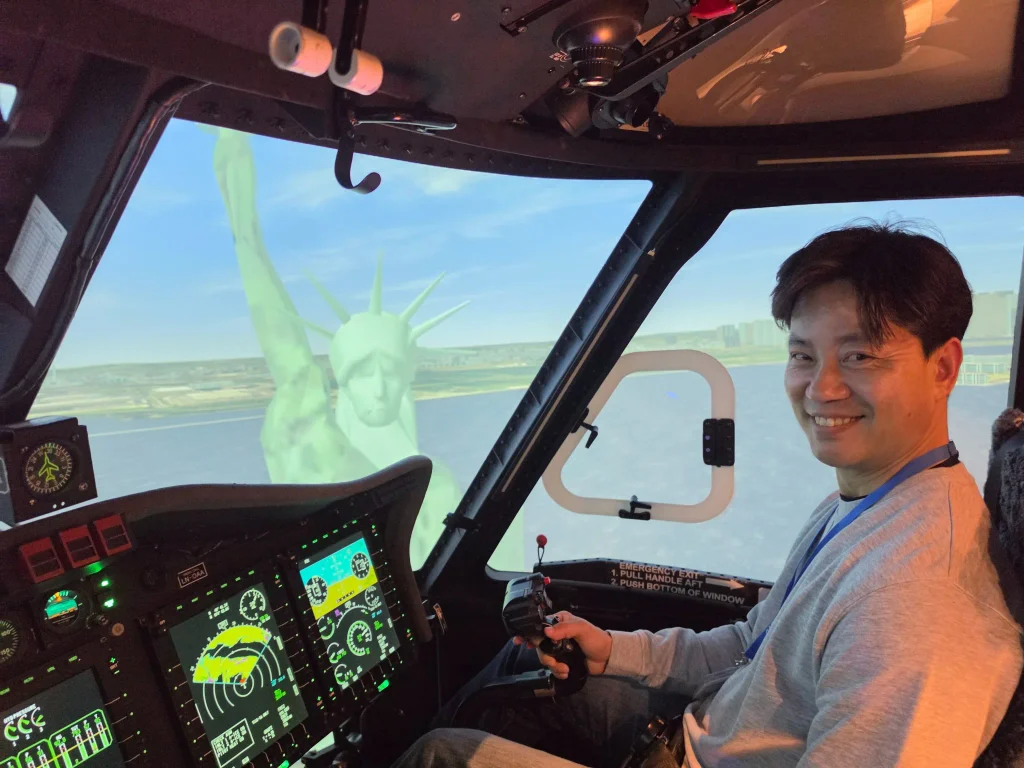
Ground School gives you time to stop and think. The simulator does not always give you that luxury.
Inside the full-flight simulator, several tasks arrive at the same time. You control the aircraft. You monitor flight instruments. You manage automation. You make callouts. You communicate with the other crewmember. You use checklists. You maintain situational awareness. You think about what is likely to happen next.
A procedure that looks simple on paper can become much harder when workload rises.
You may know the correct checklist, but spend too long finding it. You may understand the autopilot, but become so focused on one mode that you lose the bigger picture. You may diagnose the failure correctly, but allow aircraft control or crew communication to deteriorate while doing it.
That is where the simulator becomes more than a device for practising manoeuvres.
Its real value is that knowledge, aircraft control, procedure, CRM and judgement are forced to coexist.
For me, good simulator training was not about creating a pilot who never makes a mistake. It was about developing a pilot who recognises deviation early, protects the priorities, communicates clearly and returns the aircraft and crew to a stable situation.
Automation is not a convenience feature; it is another system to manage
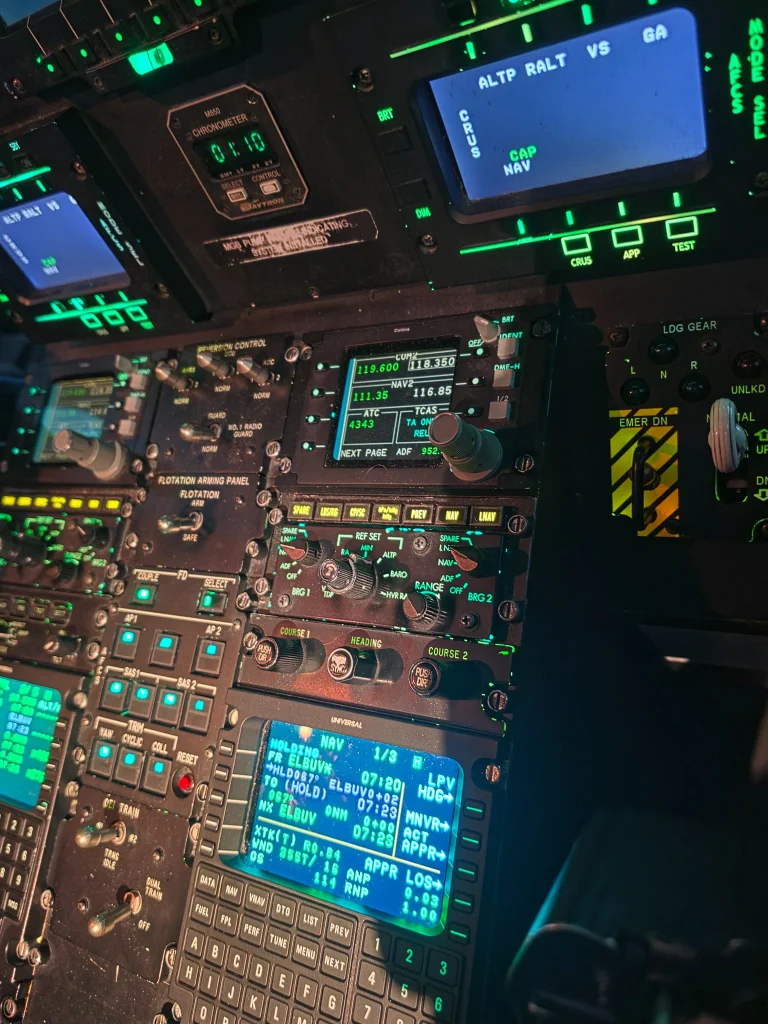
One of the most valuable parts of the training for me was working with the S-92’s automatic-flight-control system during instrument procedures.
The temptation with advanced automation is to think that it reduces the pilot’s work. In many situations it does. But automation only reduces workload when the crew understands what it is doing.
During instrument approaches and mode changes, I kept returning to a short set of questions:
- What mode is controlling the aircraft now?
- Why is that mode active?
- What mode should come next?
- Does the flight mode annunciation match what I expected?
- If the aircraft is not doing what I expected, what is my immediate response?
These questions are not unique to the S-92, and they are not unique to helicopters.
That was one of the interesting things about being in a training centre used by both fixed-wing and rotary-wing pilots. The aircraft may be very different, but the modern pilot’s responsibilities increasingly overlap: automation management, SOP discipline, situational awareness, communication and workload management.
The more capable the automation becomes, the less acceptable it is for the pilot to be surprised by it.
Abnormal and emergency training is not about saying the answer fastest
When pilots study emergency procedures, it is natural to focus on memory items and checklist steps. Those things matter. Accuracy matters.
But simulator training reminded me that the ability to recite an answer quickly is not the same as managing an abnormal situation well.
Before the checklist can help, the crew must correctly recognise what has happened. Aircraft control must be protected. The urgent problem must be separated from the less urgent one. Information must be shared clearly. The procedure must be carried out accurately. Then the crew must reassess what capability remains and decide what to do next.
A simulator creates a rare learning environment because failures that should never be deliberately created in an aircraft can be experienced safely, repeatedly and under controlled conditions.
A poor first response can be debriefed. The scenario can be reset. The crew can try again with a better plan.
That makes a high-quality simulator less like a “fake aircraft” and more like a compressed laboratory for decision-making, teamwork and risk management.
English was not a subject; it was an operational tool
Another lesson from CAE Oslo had little to do with vocabulary tests.
In international aviation training, English is not something you study to obtain a score. It is what you use to receive technical instruction, ask questions, challenge an assumption, explain your reasoning, clarify a misunderstanding and coordinate with another crewmember.
The accents are not all the same. The pace of speech is not always the same. Instructors and trainees may come from different countries and use slightly different expressions around the same technical concept.
That makes one communication skill especially important: the ability to say, clearly and without embarrassment, “I did not understand that. Could you explain it again?”
I had already completed multiple aviation courses in the United States in English, including instructor training. Even so, Norway reminded me that useful aviation English is not about sounding sophisticated. It is about exchanging safety-critical information without ambiguity.
For younger pilots, this is why I recommend starting English early. It is not just an employment requirement. It is a tool that can expand the geographical and professional limits of your career.
My hotel room became a second Ground School
The formal training day ended when I left the centre. My learning day did not.
Back at the hotel, I put system diagrams where I would see them constantly. Hydraulics. Electrical. AFCS. Main gearbox. At first they were complicated collections of lines, boxes and labels. After repeated review, the flow gradually became a map in my head.
The method that worked best for me was not rereading. It was explaining.
I would close the book and talk through the system aloud:
“This is the normal condition. If this component fails, this changes. The crew sees this indication. The required action is this. After that action, this limitation or operational consideration remains.”
Whenever I got stuck, I had found the part I did not really know.
That is a much less comfortable way to study than simply reading the same page again. It is also much more honest.
The principle later became central to the way I think about adult learning: do not measure study by how long you looked at the material. Measure it by what you can retrieve, explain and apply after you close the material.
I used AI, but I did not make AI the authority
I also used AI as part of my study process.
It was useful for turning material into questions, generating practice prompts, identifying gaps in my explanation and creating another round of recall practice.
But I kept one rule very clear: the official aircraft material was the source of truth.
For limitations, emergency procedures, numerical values, conditions and system logic, a generative AI answer was never a substitute for an approved manual, course material or instructor guidance.
The safest way I know to use AI in a technical aviation course is this:
The approved source is the answer key. AI is the tutor that keeps asking questions.
That distinction matters.
Asking AI to “teach me the S-92” transfers too much authority to a system that can still produce plausible but incorrect information. Using AI to test whether I can explain material that I have already verified in official sources is a very different workflow.
The same principle applies well beyond aviation, especially in other safety-critical fields.
What 25 years of experience helped with — and what it made harder
Experience was absolutely useful during the course.
It helped me identify which parts of a system mattered operationally. It helped me connect technical failures to real flight consequences. It made CRM, workload management, instrument approaches and abnormal decision-making easier to place in context. It also helped me understand why a procedure existed, not just what the procedure said.
But experience created risks of its own.
Previous aircraft habits can leak into a new SOP. Familiar terminology can make you believe you understand something before you really do. A senior pilot can put unnecessary pressure on himself to adapt immediately. And sometimes it is more awkward for an experienced person than a beginner to say, “I don’t know.”
The best use of experience, I concluded, is not to replace new learning with old answers.
It is to connect new knowledge to previous experience quickly while preventing the previous experience from overwriting the new aircraft’s standards.
Six principles I took away from a global aviation training environment
After a month at CAE Oslo, six ideas stood out to me.
1. Standardisation
Personal technique has a place, but common SOPs and procedures create a shared operating language. This becomes even more important when crewmembers come from different organisations and countries.
2. Repeatability
One good performance is not enough. Professional training aims for performance that can be reproduced under the same standard, again and again.
3. CRM is part of technical performance
Aircraft handling and crew communication should not be treated as separate skills. A technically correct action performed with poor communication can still create risk.
4. Automation must be monitored, not merely used
Knowing how to engage a mode is only part of automation competence. The crew must know what the system is doing, what it will do next and when to intervene.
5. Good instructors expose uncertainty
One of the most valuable things an instructor can do is refuse to accept a vague answer. Being asked to explain the logic reveals very quickly whether the trainee understands or merely recognises the correct words.
6. Learning humility is a professional skill
Experience matters. Rank matters. Flight time matters. But none of them changes the aircraft’s system logic or the published procedure. On a new type, the standard comes first.
These principles are not exclusive to CAE and they are not exclusive to helicopter training. They are part of the larger discipline of professional aviation training. A multinational environment simply makes their importance easier to see.
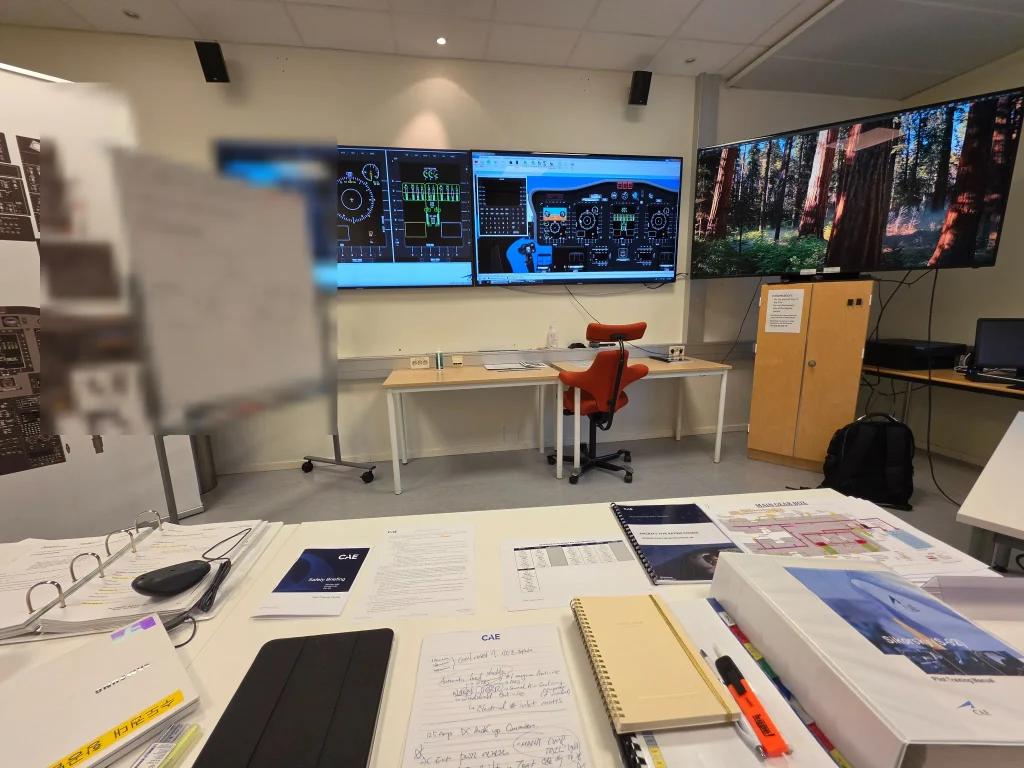
If I went back for another S-92 course, I would prepare differently
If I were preparing to return tomorrow, I would focus less on trying to pre-learn every detail and more on arriving with the right framework.
I would do eight things before the first day:
- Review the major system architecture so that Ground School begins with a map rather than isolated facts.
- Refresh IFR fundamentals and instrument-approach workflow.
- Review automation concepts and practise verbalising mode awareness.
- Prepare a disciplined method for limitations and memory-item study using only approved sources.
- Build a daily recall routine before the course starts instead of improvising one after workload increases.
- Practise technical English by explaining systems and abnormal situations aloud.
- Set up a digital file structure for notes, instructor feedback and questions that need verification.
- Use AI only after defining the authoritative source material it is allowed to help me study.
The goal would not be to arrive already “knowing the S-92.”
The goal would be to arrive ready to learn it efficiently and accurately.
Why this matters beyond the S-92
The S-92 was the aircraft I went to Oslo to learn, but the broader lesson was not aircraft-specific.
Aviation is becoming more automated, more internationally connected and more dependent on standardised crew performance. Fixed-wing pilots, helicopter pilots and cabin crew perform very different tasks, but they operate inside the same safety system.
They need common procedures. They need clear communication. They need recurrent training. They need to recognise errors before those errors become events. And they need the professional humility to keep learning long after the first licence or qualification has been earned.
That was what stayed with me after CAE Oslo.
I did not return to Korea thinking, “Now I know the S-92.”
I returned thinking, “I have been reminded how a professional pilot should learn.”
After more than 25 years in helicopters, becoming a student again was not a step backward. It was part of staying a pilot.
Make each second count.
— Captain Phil
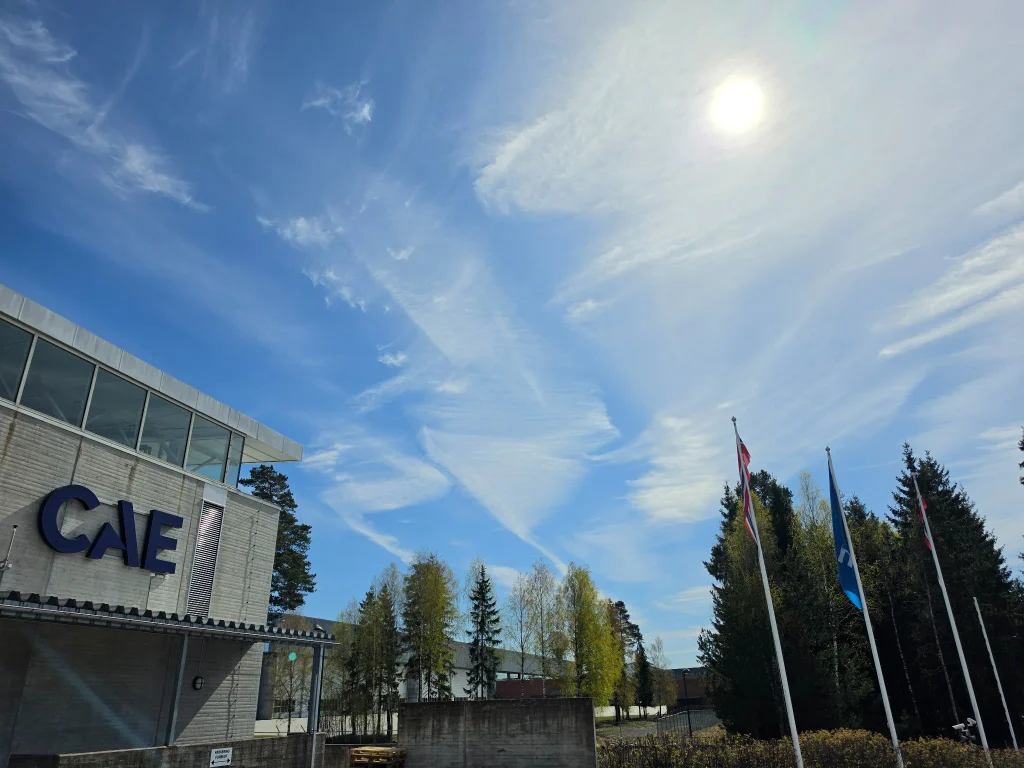
About the author
Captain Phil is a South Korean helicopter pilot with more than 25 years of rotary-wing aviation experience across military, police, and fire-service aviation. His professional background includes U.S. Army AH-64D acquisition and instructor-pilot training, AH-64E transition training, flight instruction, operational planning, aviation safety, and international S-92 training at CAE Oslo.
From April 2011 to August 2012, he served for 16 months with the United Nations Interim Force in Lebanon (UNIFIL), Sector West, as a G3 Air officer, working alongside multinational forces in support of the UN peacekeeping mission in Lebanon. Wearing the UN blue beret, he gained first-hand experience in multinational operations, cross-cultural cooperation, and aviation support within an international mission environment.
During that deployment, he also volunteered beyond his official duties. For approximately one year, he ran a free Taekwondo class for members of the multinational community, sharing Korea’s martial art and culture with people from different countries and backgrounds. It became one of the most meaningful parts of his time in Lebanon—not only serving as a Korean aviator in a UN mission, but also contributing in a small way to cultural exchange through Taekwondo.
Through CaptainPhil Lab, he writes from first-hand experience about aviation training, helicopter careers, professional learning, aviation English, international training, and practical uses of AI. His writing is built around a simple belief: regardless of experience or rank, professionals must remain willing to become students again.
Make each second count.
Official sources and further reading
- CAE — Available Aircraft Platforms (Sikorsky S-92 / Oslo): https://www.cae.com/civil-aviation/available-aircraft-platforms-hat
- CAE — Norwegian Transparency Act Report FY2025: https://www.cae.com/content/docs/corporate/Norwegian_Transparency_Act_Report_FY25.pdf
- CAE — Cabin Crew Training network, April 2025: https://www.cae.com/content/docs/Civil_Aviation/Brochures/CAEC_9747_16_Brochure_CabinCrew_April2025_VF1_DIGITAL.pdf
- Lockheed Martin — Sikorsky S-92 Helicopter: https://www.lockheedmartin.com/en-us/products/sikorsky-s-92-helicopter.html
- CaptainPhil Lab — Korean CAE Oslo training diary: https://captainphillab.com/cae-oslo-helicopter-training-experience/

댓글 0
첫 댓글을 남겨보세요.